

Temporal Evidence
Category: OSINT
Difficulty: Medium
Challenge Description
Temporal Evidence was an OSINT and digital forensics challenge where each artifact revealed the next clue. The solution required following a trail through publicly available information, image metadata, and a Linux filesystem image before piecing together the final flag.
Approach
Finding the First Lead
The provided video contained the string:
WHITER0SE-123Searching for this username led to a GitHub profile with a repository named temporal-engine. One of the commit messages suggested looking beyond the visible contents of the files, hinting that metadata would play an important role.
Inspecting the Image
The second artifact was final.png. Running ExifTool revealed a large UserComment field containing an encoded payload.
exiftool final.pngAfter cleaning and decoding the Base64 data, it produced a ZIP archive containing:
fsociety_evidence.imgUsing the file utility confirmed it was an EXT4 filesystem image, which could be mounted for further analysis.
file fsociety_evidence.img
sudo mount -o loop fsociety_evidence.img /mnt/evidence
Filesystem Analysis
Browsing the mounted filesystem eventually led to Elliot’s home directory. The .bash_history file contained several previously executed commands, including a reference to the username:
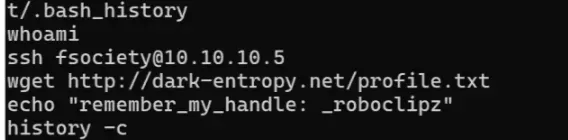
_roboclipzThis became the next OSINT pivot.
Final OSINT Pivot
Searching for _roboclipz uncovered a profile containing multiple cryptic posts. Individually they appeared meaningless, but together they formed the missing phrase required for the challenge.
Combining the recovered text with the flag format revealed the final answer.
XPL8{3ll10t_F0und_Th3_H1dd3n_4rch1vE}Conclusion
Temporal Evidence was a great example of how multiple investigative techniques can complement each other. Instead of relying on a single trick, the challenge combined metadata analysis, filesystem forensics, shell history inspection, and OSINT to gradually reveal the solution. Each artifact contributed a small piece of the puzzle, rewarding a methodical approach over brute force.